When I moved from European payment rails to Australian eCommerce and FinTech, I learned quickly that a slick interface never fixes a flawed underlying model. Roulette works the same way: the wheel does not care how polished your app is. If you are sitting at a Geelong pub table or tapping through a mobile browser on your commute, the real question is whether your approach survives variance. Most players stack bets on hope rather than structure, and that is where the losses compound. Before you place another chip, it pays to separate the noise from the actual arithmetic.
Chasing Patterns in a Game Built on Variance

A lot of punters read streaks like they are reading a payment ledger, but a well-shuffled deck has almost certainly never existed in that exact order before in history, and the same logic applies to each new spin. You might spot six reds in a row and start plotting a recovery bet, yet the wheel has no memory and no obligation to even out your last loss. I have sat through enough product launches to know that a feature can look elegant while the backend is quietly leaking value, and roulette strategy mistakes work exactly like that. Players treat short runs as signals instead of noise, then scale their stakes to match a narrative that never existed. The sensible move is to accept that each outcome resets independently, so your edge comes from bankroll discipline, not pattern recognition. Roulette strategy visual ballistics and smarter
Misreading the Wheel and Overvaluing Visual Systems
Some readers try to track ball behaviour or predict pockets with visual ballistics and smarter game reading, but that approach still meets the same hard floor of randomness once the dealer changes pace or the wheel wears. I have evaluated enough gaming platforms across Europe and Australia to see that a clever-looking mechanic often masks a simple truth: if the inputs are not genuinely controllable, the output is just a prettier guess. You can study release angles all afternoon, but a single table replacement or a minor fret shift breaks the whole exercise. Treat any visual system as entertainment, not as a reliable edge, and you will keep your losses closer to what you actually planned for.
Mobile Fit and Bonus Terms That Hide the Real Cost
A mobile-first layout matters because most of us check tables between meetings or during a quiet arvo, and a clunky app will punish your timing long before the wheel does. Responsiveness, fast load times, and navigation that does not bury the table limits are the difference between a controlled session and a rushed one. I have spent years wiring payment flows where a delayed confirmation costs real money, and the same mindset applies here: if your mobile session feels laggy or the bonus terms hide a restrictive turnover requirement, the product is not built for steady play. Look for clear currency display, straightforward registration, and support that actually answers rather than loops you through a bot. A tidy mobile experience does not win you spins, but it does stop you from making expensive mistakes under pressure.
Expert Views on Staking and Expectation
Charlotte Wright, Head of Analytics, Southern Capital Advisory, puts it plainly: the biggest roulette strategy mistakes come from treating entertainment budgets like investment plans, because the expected value stays negative no matter how tidy your staking sheet looks. Dylan Morris, Independent iGaming Expert, Coastal Wager Research, adds that players often confuse session discipline with an edge, when in reality they are just slowing the rate at which variance catches up with them. I have seen that same gap in my own work across digital assets and payments, where a polished dashboard can make a losing model feel responsible. The honest verdict is simple: if you want a controlled night out rather than a winning system, size your bets to a fixed bankroll, stop when the limit is hit, and never chase a number that the table has already moved past.
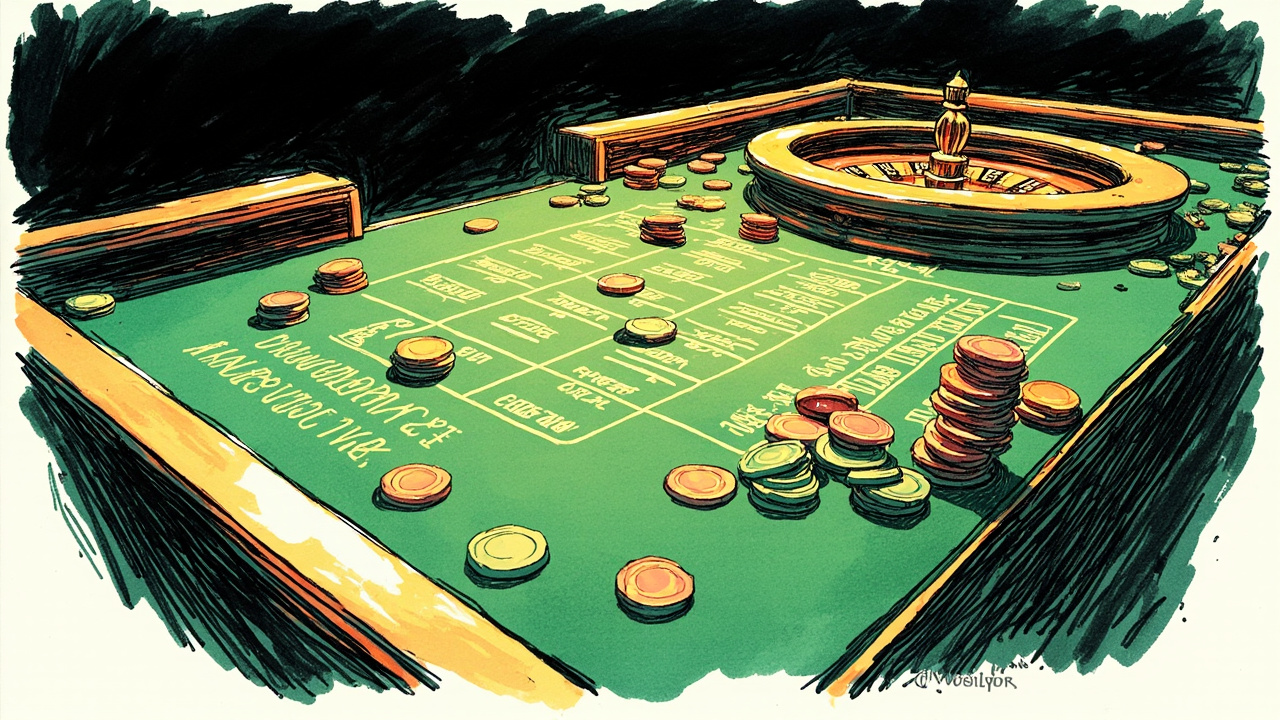
- Variance – the natural swing of wins and losses around the average outcome over time.
- Bankroll – the fixed amount you set aside for a session and do not top up mid-spin.
- Turnover requirement – the amount you must wager before a bonus credit can be withdrawn.
- Expected value – the long-run average result of a bet, which stays negative on standard roulette bets.
So here is the question I want to leave with you: when a table or app looks sharp but the maths stays stubborn, do you treat it as a night out with a fixed limit, or do you keep looking for a system that quietly promises more than the wheel can deliver? https://charlotteestudio.com